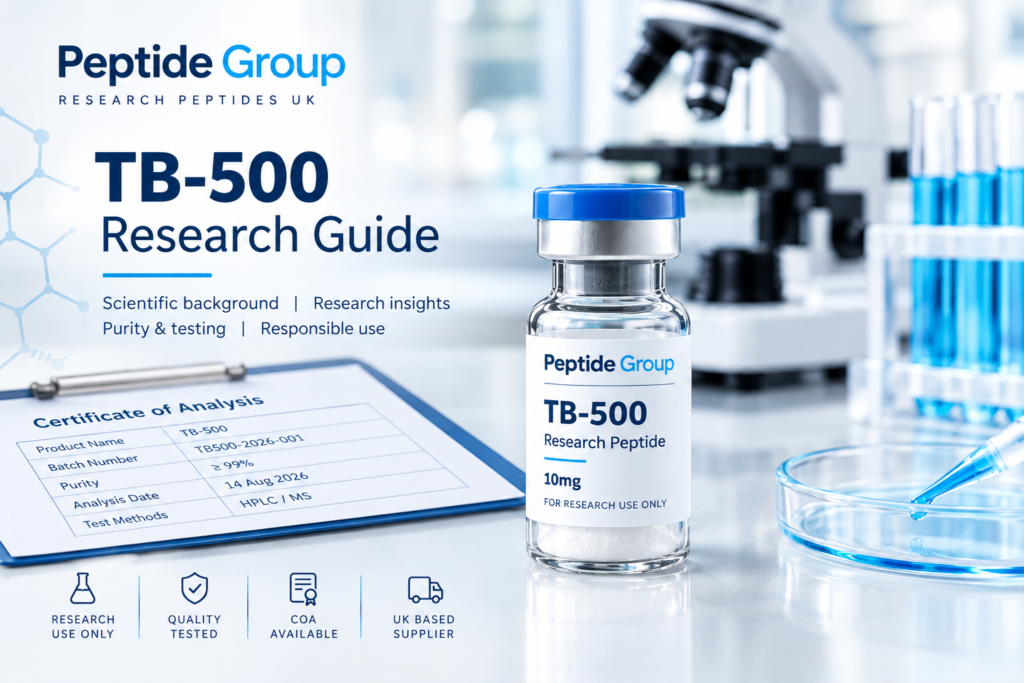
Explore TB-500's scientific background, its relationship to thymosin beta-4, current research limitations and the importance of analytical testing.
What Is TB-500?
TB-500 is a name used for synthetic peptide materials associated with thymosin beta-4, a naturally occurring peptide involved in several cellular processes. The name is not used consistently across all research and commercial contexts, so the exact molecular identity of a material should always be verified.
Interest in TB-500 has grown because of research investigating cellular movement, tissue biology and repair-related processes. However, scientific interest does not establish that a compound is safe or effective for human use.
What Does Research Investigate?
Research involving thymosin beta-4 has explored several biological processes, including cell migration, blood vessel formation and responses associated with tissue repair.
It is important to distinguish research on full-length thymosin beta-4 from studies of TB-500 fragments. These materials should not automatically be considered interchangeable.
A 2026 scoping review found that the available literature was largely preclinical, with limited direct evidence for TB-500 in musculoskeletal applications. Findings from laboratory and animal studies cannot establish benefits in humans. Read the scientific review.
Why Does Peptide Quality Matter?
Reliable analytical information helps researchers assess whether a material meets their laboratory requirements.
When evaluating a research peptide, consider:
- Certificate of analysis (COA): Review batch-specific testing documentation.
- Identity testing: Check whether appropriate methods confirm the compound’s identity.
- Purity analysis: Understand the method used and what the reported percentage represents.
- Batch traceability: Match the product identifier to its documentation.
- Storage information: Follow product-specific handling instructions.
A high purity result alone does not prove sterility, safety or suitability for a particular experiment.
Storage and Handling Considerations
Peptide stability varies according to the material, formulation and environmental conditions. Researchers should consult the manufacturer’s documentation for appropriate storage requirements rather than assuming that all peptides require identical conditions.
Keep laboratory materials correctly labelled, maintain batch records and follow suitable handling procedures. Any additional precautions should be based on the relevant safety documentation and laboratory risk assessment.
Explore the Peptide Group UK Catalogue
Visit the Peptide Group UK shop to explore the current catalogue and review the information available for individual products.
Conclusion
TB-500 remains a subject of scientific interest, but its exact identity and the limitations of the available evidence deserve careful consideration. Researchers should prioritise reliable analytical documentation, appropriate handling and evidence-based interpretation.
Research-use disclaimer: This article is for educational purposes only. Research materials are not intended for human or veterinary consumption, diagnosis or treatment. Always follow applicable laws and laboratory safety requirements.